Let’s be honest from the start: moving is one of the most stressful experiences life throws at you. Psychologists routinely rank relocation alongside career changes and breakups on the list of major life stressors, and it’s easy to see why. Between packing up every memory you own, juggling logistics, forwarding mail, and emotionally bracing for a brand-new chapter, the entire process can feel overwhelming.


Make your move a pleasant surprise with our expert cross-country services.
But there’s another layer of stress that ambushes people right when they’re least prepared: the budget.
Most of us sit down weeks before the move, open a spreadsheet, and tally up the obvious costs – the truck rental, the security deposit, the professional crew, the storage unit. We look at the total, take a deep breath, and think, “Okay, I’ve got this.”
The problem? Real-life moving days never match a tidy spreadsheet. The big expenses rarely break your budget – it’s the small, hidden moving costs that quietly drain your wallet, $20 and $50 at a time. The extra roll of tape. The parking ticket. The emergency lunch order. The deposit your landlord quietly shaves off.
If you’re planning a move and feeling that knot tighten in your stomach, take a breath. At Long Distance USA Movers, we’ve helped thousands of families navigate exactly this. We know where the financial traps are hiding – and more importantly, we know how to help you sidestep every single one.Here are the five biggest budget-busters most movers don’t see coming, plus the practical strategies you need to keep your money where it belongs: in your pocket, ready for that brand-new home.
1. The Never-Ending Hunt for Packing Supplies
It’s a story we hear constantly. You start strong with a stack of free boxes from the grocery store and a single roll of tape, fully convinced you’re set. Then reality kicks in.
Those grocery store boxes can’t handle a shelf of hardcover books. Your wine glasses need dish-pack inserts. Your suits and dresses arrive wrinkled into oblivion without proper wardrobe boxes. Suddenly you’re making your fourth panicked trip to the hardware store, paying retail for tape, bubble wrap, and specialty boxes you never planned to buy.
Why “Cheap” Packing Supplies Aren’t Actually Cheap
Here’s the math nobody warns you about:
- A single retail wardrobe box: $15-$20
- A premium roll of bubble wrap: $25-$30
- A three-bedroom home typically needs 80-100 boxes of various sizes
Buy half of those at retail, add tape, packing paper, mattress covers, and markers, and you’ve burned through $300 to $500 before a single item hits the truck.
The trap: Underestimating how much you actually own and waiting until the last second to gather supplies. When you’re frantically packing at 11 PM the night before the move, you don’t shop for deals – you pay whatever the 24-hour store charges.
How to Beat the Packing Supply Trap
Treat packing supplies as a strategic mission that begins at least six weeks before the move:
- Source used boxes locally. Facebook Marketplace, Craigslist, Freecycle, and neighborhood Buy Nothing groups are full of people desperate to give away gently used moving boxes for free.
- Skip the bubble wrap. Wrap fragile dishes, frames, and electronics in items you already have to move — bath towels, sweaters, blankets, and bed sheets. They protect just as well and earn their place on the truck twice.
- Buy specialty items in bulk online. Tape, packing paper, and mattress covers are dramatically cheaper from wholesale sites than from retail moving stores.
Pro tip: When you book with Long Distance USA Movers, ask about our packing services and supply bundles. Folding supplies into your quote is almost always cheaper than retail – and it keeps the chaos out of your living room.
Ready for a Long Distance Move?
Get A Quote
2. Feeding and Hydrating Your Moving Crew
Moving day is a full-blown athletic event. It burns calories, drains stamina, and demands constant fuel. Whether you’ve sweet-talked your closest friends into hauling your sofa down a narrow staircase or hired a professional crew, everyone on that team needs to eat and drink.
The classic “pizza and beer for friends” tradition exists for a reason – but in today’s economy, it’s shockingly expensive. A typical 10- to 12-hour move (standard for a multi-bedroom home) means breakfast, lunch, dinner, and an endless stream of drinks for five to eight people.
The Real Cost of Moving-Day Meals
A realistic breakdown:
- Breakfast sandwiches and coffee for four: $40
- Lunch via delivery app, with fees and tip: $75
- Three large pizzas, wings, and a thank-you case of beer: $100
- Cases of water and sports drinks from the corner store: $20
That’s $230 or more on food alone, for one day – and that’s before counting the snacks people grab between meals.
The trap: Leaning on food delivery apps in the chaos. When you’re covered in dust and surrounded by half-sealed boxes, tapping that app feels effortless. But service fees, surge pricing, and tips can inflate your real food bill by 30 to 40 percent.
How to Feed Your Crew Without Wrecking Your Budget
Treat moving-day food the way smart people treat a busy work week — plan, prep, and shop ahead.
- Hit a wholesale club a few days before the move for bulk snacks, sandwich fixings, and gallon jugs of water.
- Make hearty deli-style sandwiches or a big pasta salad the night before – both serve cold and feed a crowd.
- Set up a clearly labeled “moving day cooler” in an easy-to-reach spot. Stock it with ice, drinks, fruit, and protein bars so nobody ever has to dig through boxes for a snack.
- Brew coffee at home in a thermos instead of running a $40 café tab.
A little prep can shave $100 or more off your moving day spend – and keep your crew far happier than another lukewarm delivery pizza ever could.
Moving Insurance
All your stuff is secure with Long Distance USA Movers, but in case something does happen to it, there’s a moving insurance policy in place. We offer both basic Valuation Coverage and Full Value Protection.
Learn moreAuto Transport
Move your car across the country in an open or enclosed trailer – for an affordable fee. We offer car transport as a standalone service, but you can bundle it with your household move and get a hefty discount.
Learn moreStorage Services
Our spacious climate-controlled units will protect your things until the drop-off. No need to worry about them because all items are labeled and secure, and each customer gets a dedicated unit mixup isn’t possible.
Learn more3. Parking Permits, Elevator Fees, and Building Bureaucracy
If you’re moving from one quiet suburban driveway to another, you can probably skim this section. But if your move involves a city, a high-rise, or a dense urban neighborhood, municipal rules and building policies can quietly cost you a small fortune.
City streets are crowded, and local governments love to monetize that space. Many cities require a temporary street parking permit — sometimes called a “street occupancy permit” – to legally reserve curb space for a moving truck. On top of that, most high-rise buildings charge a non-refundable administrative fee to reserve the freight elevator and require a refundable damage deposit of $250 to $500 before they’ll hand over the key.
What Skipping the Paperwork Really Costs
Decide to risk it and have your movers double-park while they “quickly” load the truck? A commercial parking violation in most major cities runs $100 to $250 – and ticketing officers patrol active loading zones aggressively.
But the more painful hidden cost is time. If you haven’t reserved the freight elevator, your crew may end up sharing a passenger elevator with frustrated neighbors – or simply waiting. At a typical hourly rate of $150 per hour, two hours of standing around equals $300 in pure waste – money you’re paying trained professionals to do nothing.
The trap: Assuming things will “just work out.” Assuming the truck can park anywhere. Assuming your rent buys you elevator priority. None of those assumptions survive contact with a Saturday morning in a busy building.
How to Stay Ahead of City and Building Rules
Communication is your best friend here, and three to four weeks of lead time is the magic number.
- Call the parking authority in both your old and new cities. Ask whether commercial truck permits are required, how to apply, and how long it takes. Some cities need 10 business days plus posted street signs.
- Call the property manager or HOA of both buildings. Ask about freight elevator reservations, required certificates of insurance, allowed move-in hours, and damage deposits.
- Get every confirmation in writing. A $30–$50 permit secured in advance is dramatically cheaper than a $250 ticket on moving day.
Why this matters with us: Long Distance USA Movers handles building-side coordination on long-distance moves every week. When you book with us, we walk you through the exact paperwork your city and building require — so nothing surprises you on moving day.
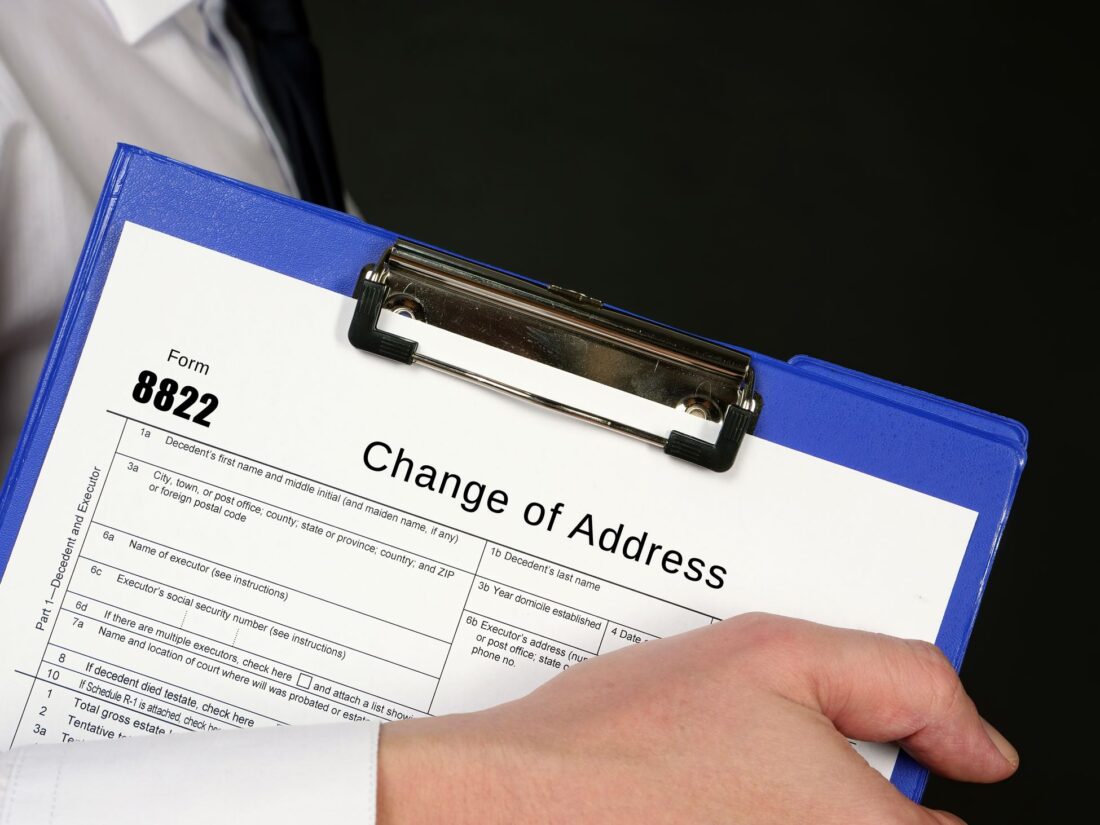
Ensure you receive all your important mail by completing a change of address form before your move.
4. The Exhausting Double-Cleaning Dilemma
When you move from one home to another, you’re not cleaning one space – you’re cleaning two, often within the same week.
First, there’s the move-out clean. If you’re a renter, your old place needs to sparkle if you want your full security deposit back. That means scrubbing the inside of the oven, wiping baseboards, polishing fixtures, and erasing every trace of the years you spent there. Meanwhile, your new home likely needs a deep clean before you unpack a single box – because the previous occupants’ definition of “clean” rarely matches yours.
Why Cleaning Twice Hits Your Wallet So Hard
- A standard security deposit equals one month’s rent. On a $1,500 apartment, that’s $1,500 hanging on how clean you leave the place.
- Hiring a professional move-out cleaning service runs $200 to $400 per home – double that if you outsource both ends.
- DIY cleaning isn’t free either. Heavy-duty degreasers, fresh mops, sponges, brushes, and a rented carpet shampooer can easily total $100 to $150.
The trap: Saving cleaning for the last day. By the time the truck is loaded and your back is screaming, scrubbing grout with a toothbrush is the last thing you can mentally face. That exhaustion forces bad decisions – abandoning the deposit, hiring last-minute premium cleaners, or both.
A Phased Cleaning Strategy That Saves Hundreds
You can’t avoid the cleaning, but you absolutely can avoid paying premium prices for it.
- Get keys early if you can. Deep clean your new place a day or two before the truck arrives, while it’s still empty and easy to navigate.
- Clean as you pack. Once the guest bedroom is boxed up, scrub the baseboards, vacuum the corners, wipe the windows, and shut the door. Repeat room by room.
- Build a moving-day cleaning kit. Set aside a labeled tote with multipurpose spray, paper towels, a sponge, a vacuum, and trash bags. Don’t pack it on the truck – keep it in your car.
- Stack cleaning supplies into your shopping list early. Buying them gradually over a month is far cheaper and less stressful than panic-buying at retail prices.
By moving day, the only thing left should be a quick final pass – not an eight-hour deep clean.

Educating yourself on the moving process helps ensure a smooth and worry-free relocation.
5. Damages to Your Belongings (and the Property Itself)
We all believe we’ll be careful. We wrap mugs in paper, treat the TV like a newborn, and steer the couch through doorways with surgical precision. But moving is chaos, and even the most cautious people have accidents.
A box slips from a sweaty grip. A couch wedges into a stairwell, peeling paint off the wall. A toolbox lands hard on a hardwood floor. A vintage plate shatters because it was packed under something heavier. These small mishaps rarely make the highlight reel, but they consistently puncture moving budgets.
The Moving Insurance Surprise Most People Don’t See Coming
If you hired a professional crew, you might assume your belongings are fully covered. They usually aren’t. Federal law only requires moving companies to provide Released Value Protection, which reimburses your items at a brutal rate of 60 cents per pound.
Picture this: a mover drops your 10-pound, $1,500 OLED television and shatters the screen. Under Released Value Protection, the company is legally obligated to pay you exactly $6. You eat the remaining $1,494.
Property damage is just as painful:
- Gouging a hardwood floor with a heavy dresser: $150-$300 for a contractor patch and refinish.
- Scuffing or denting drywall: $100-$250 in repair and repainting.
- Broken light fixtures, cracked tiles, or torn carpet: easily $200+ each.
The trap: Optimism bias – the quiet belief that “this won’t happen to me.” It leads to skipped padding, unmeasured doorways, and unread insurance fine print.
How to Protect Yourself (and Your Walls)
A little prep transforms your odds dramatically:
- Measure every doorway, hallway, and stairwell in your new home before moving day. Compare those numbers to the dimensions of your largest furniture. Knowing in advance saves walls – and tempers.
- Lay protection down first. Cheap plastic floor runners, heavy moving blankets, or even flattened cardboard shield hardwood and tile from boots and dragging furniture legs.
- Photograph valuables before the truck loads. Time-stamped photos of your TV, antiques, and fragile items document their pre-move condition – invaluable if you ever need to file a claim.
- Upgrade to Full Value Protection. Either through your moving company or a third-party insurer, this coverage repairs or replaces damaged items at their actual market value. The premium is small. The peace of mind is enormous.
At Long Distance USA Movers, we offer transparent Full Value Protection options on every long-distance move. No fine-print surprises, no 60-cents-per-pound shocks – just honest coverage that matches the real value of what you own.
Ready for a Long Distance Move?
Get A Quote
Plan Smart, Move Smart, Save Big
Relocating your life will always take work and a bit of sweat – but it absolutely doesn’t have to wreck your bank account. The difference between a moving budget that survives and one that collapses comes down to one thing: foresight.
When you plan logistics weeks in advance, get creative with packing resources, understand your insurance options, and anticipate the everyday expenses most movers miss, you take real control of your move. Instead of arriving exhausted and broke, you cross the threshold of your new home with cash to spare – ready to order that celebratory pizza and start unpacking your next chapter on your own terms..
And if you’re staring down a mountain of boxes right now and want a transparent, hidden-fee-free quote from a long-distance moving partner that actually plans for these costs with you, reach out to Long Distance USA Movers today for a free, comprehensive estimate. We’ll handle the heavy lifting – you focus on your new home.
FAQ
How much of a financial buffer should I add to my moving budget for unexpected costs?
As a general rule of thumb in the moving industry, you should add a 10% to 20% contingency buffer on top of your total estimated moving budget. For example, if you expect your move to cost $1,500, set aside an extra $150 to $300.
That safety net is what keeps a stressful day from turning into a financial setback. It covers the small surprises – emergency packing supplies, a parking ticket, last-minute meals for the crew, a bigger tip than you planned – without forcing you to swipe a credit card you didn’t want to touch.
Are there hidden fees I should ask my moving company about before signing the contract?
Absolutely – and this is where most people get burned. When you request a quote, always ask the company for a fully itemized list of potential accessorial charges. These are legitimate fees, but they only feel “hidden” when no one mentions them upfront.
Common accessorial charges include:
- Stair fees: An extra charge when movers have to carry items up multiple flights of stairs instead of using an elevator.
- Long-carry fees: Charged when the truck can’t park close to your front door and the crew has to walk a long distance with each box.
- Bulky item surcharges: Extra fees for exceptionally heavy or awkward items like pianos, gun safes, hot tubs, or riding lawnmowers.
- Shuttle fees: Charged on long-distance moves when a smaller truck has to ferry items because a full-size 18-wheeler can’t reach your home.
- Storage-in-transit fees: Daily charges if your items need to sit in storage between pickup and delivery.
A reputable mover will walk you through every potential charge before you sign. At Long Distance USA Movers, our quotes are itemized line by line – no fine print, no surprises on delivery day.
What's the difference between Released Value Protection and Full Value Protection?
Released Value Protection is the free, federally required minimum coverage. It pays out only 60 cents per pound, per item – meaning a 10-pound, $1,500 TV would be reimbursed at just $6.
Full Value Protection is paid coverage that reimburses you at the actual market value of any damaged or lost item. The mover must either repair it, replace it, or pay you the full cash value.
For long-distance moves with valuable belongings, Full Value Protection is almost always worth the small premium. Long Distance USA Movers offers transparent Full Value options on every interstate move – just ask for the details when you request your quote.
Does my standard renters or homeowners insurance cover my belongings while they're in transit?
Usually, no – and this is one of the most damaging misconceptions in the moving world. Most standard homeowners and renters policies only cover your belongings while they’re physically inside your insured residence. The moment those items are loaded onto a moving truck, that coverage typically drops away.
Before you assume you’re protected:
- Call your insurance agent and ask point-blank whether your policy includes “transit coverage” or any moving-related extension.
- Get the answer in writing, not just over the phone.
- If transit isn’t covered, purchase Full Value Protection directly through your moving company or a third-party moving insurance provider.
Discovering after the fact that nothing was covered is one of the most expensive surprises a mover can experience. A short phone call now can save you thousands.