So you got in. Congratulations — that acceptance letter is proof of everything you have worked for, and now you are headed to one of the most iconic academic cities in the world. But between the excitement and the celebrations, there is a very real task ahead: pulling off a successful student relocation. Whether you are moving to Boston from across the country or just a few states over, getting yourself and your belongings safely to campus requires more than good intentions. It takes a real plan.
This guide is built to help you with exactly that. We will walk you through the local costs, the best neighborhoods, the logistics of long-distance moving, the smartest packing strategies, and when to seriously consider bringing in professionals to handle the heavy lifting — literally. Let’s turn what could be an overwhelming experience into an exciting, well-organized fresh start.


Reliable nationwide transportation for your long distance USA move.
What Is It Like Living in Boston as a Student?
If there is one thing that sets this city apart, it is the fact that the entire city feels like one enormous, interconnected campus. With more than 30 colleges and universities spread across the greater metro area, academic life is not just a feature of Boston — it is the heartbeat.
Cafés are packed with students working on research papers. Parks transform into open-air study halls when spring arrives. Local businesses lean into the collegiate crowd with generous student discounts. You will notice that the rhythm of the entire city shifts with the academic calendar — and you will quickly become part of that rhythm.
But make no mistake: this is a fast-paced, historically rich, and fiercely sports-loving metropolis. The energy is contagious, but it also demands that you manage your time, budget, and social life with intention from day one.
How Your Daily Life Changes When You Move to Boston
Relocating to a major East Coast city means adjusting to a faster, more intentional pace of life. Here is what shifts almost immediately:
- Your commute transforms. Comfortable car rides are replaced by brisk walks, bike lanes, and subway stops you will memorize within your first week.
- Your wardrobe evolves. Layering becomes second nature. From late November through March, functional, weather-resistant clothing beats fashion every time.
- Your independence accelerates. Living in a bustling metropolis pushes you to become street-smart, organized, and proactive about every aspect of your schedule.
Ready for a Long Distance Move?
Get A Quote
Essential Things to Know Before You Move to Boston
Before you start packing a single box, there are a few local realities you need to understand. Boston is charming and vibrant, but it plays by its own set of rules.
The Weather Will Test You
New England’s climate is famously unpredictable. Autumn is breathtaking — crisp air, golden foliage, that unmistakable fall feeling. But winter hits hard. Expect long stretches of freezing temperatures, heavy snowfall, and biting harbor winds. A high-quality winter jacket and waterproof boots are absolute essentials, not optional purchases.
Public Transit Is Your Lifeline
Boston consistently ranks among the most walkable cities in America, and locals rely on the public transportation system known as the “T” (MBTA). You will quickly learn its color-coded subway lines — Green, Red, Orange, and Blue — and they will become your primary way of getting to class, exploring the city, and meeting friends on weekends.
Driving Here Is a Challenge
Centuries-old street layouts, aggressive local driving habits, and notoriously expensive parking make daily car commutes to campus highly impractical for most students. If you do bring your vehicle, be prepared to navigate one-way streets, tight turns, and a general road culture that favors the bold.
Parking Permits Are Mandatory
If you decide to use car shipping to Boston because you genuinely need your vehicle for off-campus work, clinical placements, or weekend trips home, apply for a neighborhood resident parking permit well in advance. Failing to do so can result in expensive tickets or, worse, having your car towed.
Auto Transport
Move your car across the country in an open or enclosed trailer – for an affordable fee. We offer car transport as a standalone service, but you can bundle it with your household move and get a hefty discount.
Learn moreMoving Services
Treat yourself with a white glove long distance moving service that’s based on the inventory list and not weight. This means a price guarantee, transparent move costs and premium moving service.
Learn moreMoving Insurance
All your stuff is secure with Long Distance USA Movers, but in case something does happen to it, there’s a moving insurance policy in place. We offer both basic Valuation Coverage and Full Value Protection.
Learn moreJobs and Economy: Why Boston Is a Launchpad for Your Career
The local economy heading into 2026 is thriving, especially within education, healthcare, biotechnology, and artificial intelligence. For incoming students, this is not just a nice perk — it is a genuine, career-shaping advantage.
Instead of reading about industry leaders in your textbooks, you will be living down the street from them. Here are just a few examples of what is in your new backyard:
- Healthcare and Medicine: Clinical rotations and internships at world-renowned facilities like Massachusetts General Hospital, Brigham and Women’s, and Boston Children’s Hospital.
- Biotech and Pharma: STEM students can cross the river to Kendall Square in Cambridge — widely known as the “most innovative square mile on the planet” — home to Moderna, Biogen, and Vertex Pharmaceuticals.
- Tech and AI: Computer science and engineering majors will find corporate hubs for Google, Amazon, Microsoft, and local leaders like Boston Dynamics.
- Business and Finance: Powerhouses like Fidelity Investments, State Street, and HubSpot offer competitive co-op programs and post-graduation roles.
And if you simply need a flexible part-time job to help cover expenses, retail positions along Newbury Street, hospitality roles, and on-campus administration work are plentiful. The networking opportunities alone — industry meetups in the Seaport District, university job fairs, tech conferences — can connect you face-to-face with recruiters from Fortune 500 companies and cutting-edge startups.
Everyday Expenses: A Realistic 2026 Cost Breakdown
Living in a world-class city means world-class prices. Smart budgeting is not optional — it is essential. Here is what to expect:
| Category | Monthly Estimat | What to Know |
|---|---|---|
| Groceries & Home Cooking | $350 – $500 | Prices run slightly above the national average. Cooking at home is the single best way to keep food costs manageable. |
| Public Transit (The T) | ~$90 | A monthly MBTA pass runs about $90. Many universities offer discounted semester passes — always check with student affairs first. |
| Entertainment & Dining | $30 – $50/dinner | Dining out, craft coffee, and nightlife add up fast. Track these discretionary expenses closely. |
| Utilities & Winter Heating | Varies | If your lease does not include heat, budget carefully for high gas or electric bills during the long winter months. |
Hidden Costs That Catch Students Off Guard
Your budget needs to account for much more than rent and tuition. Here are the expenses that surprise most newcomers:
- Broker fees: A unique and harsh reality of the Boston rental market. Securing an apartment almost always means paying a broker fee equal to one full month’s rent.
- Move-in deposits: Landlords typically require the first month, last month, and a security deposit upfront. That could mean four months’ rent before you even get the keys.
- Building and elevator fees: Some high-rise or luxury buildings charge non-refundable fees just to reserve the freight elevator on your moving day.
Best Neighborhoods for Students in Boston
Where you live shapes your entire college experience. Here are the areas most popular with students, depending on which university you attend:
Allston and Brighton
Often called “Student City,” these neighborhoods are favorites among Boston University and Boston College students. The vibe is young and energetic, with more affordable rents than downtown, plus plenty of late-night food spots, live music venues, and thrift stores.
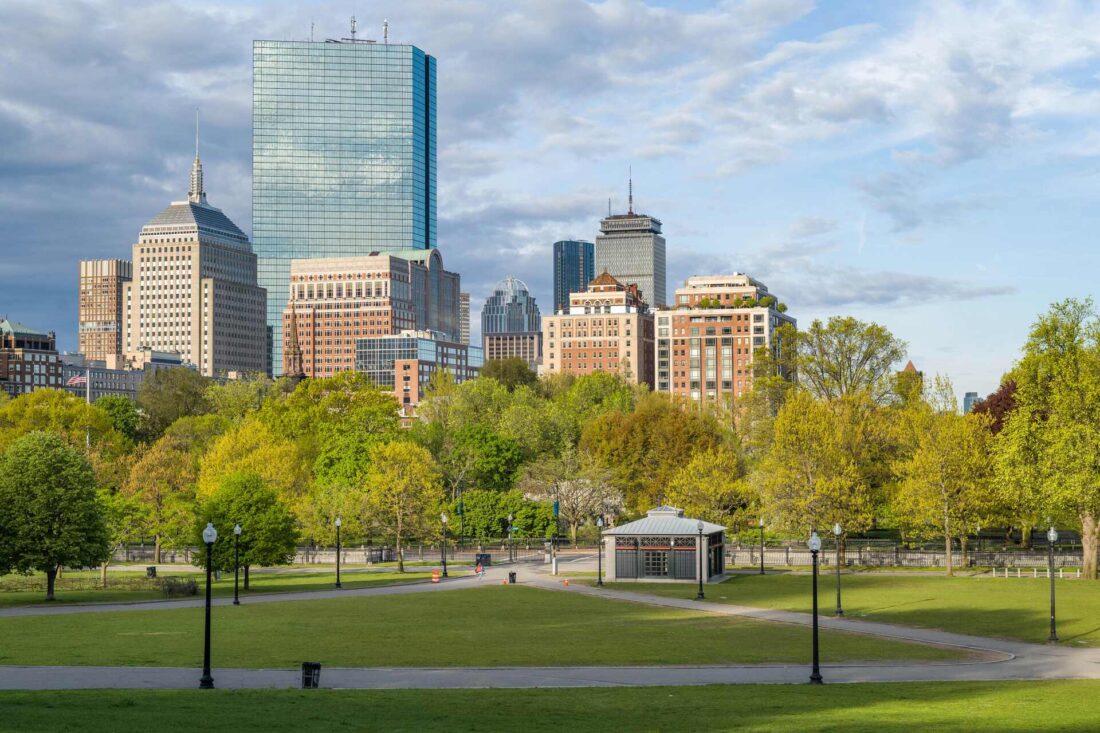
Enjoy stunning views of Back Bay from Boston Common.
Fenway / Kenmore
Ideal for students at Northeastern, Wentworth, and BU. Living near the iconic Fenway Park means great restaurants, lively sports bars, and easy Green Line access right at your doorstep.
Cambridge and Somerville
The natural home base for Harvard and MIT students. Cross the Charles River and you will find a slightly more intellectual, laid-back atmosphere with beautiful historic homes, thriving tech and biotech hubs, and incredible independent coffee shops.
Mission Hill
Popular among students at the Massachusetts College of Pharmacy, Northeastern, and Wentworth. Expect spectacular city skyline views, spacious triple-decker apartments, and a strong, close-knit student community.
Planning Your Student Move: A Step-by-Step Timeline
Three Months Before Your Move
Your top priority should be locking down your living situation. Decide whether you are staying in a university dorm or hunting for an off-campus apartment, and start the process immediately. This is also the perfect time to go through everything you own with a critical eye — if you have not used something in a year, it probably does not deserve a spot in your new, smaller living space.
Two Months Before Your Move
Research and compare professional moving companies, read reviews, and request detailed estimates. If you are crossing state lines, booking long-distance movers early is essential — peak-season schedules fill up fast, and the best rates go to those who plan ahead. A trusted company like Long Distance USA Movers specializes in exactly this type of student relocation and can provide a free, no-obligation quote to help you plan your budget with confidence.
One Month Before Your Move
It is time to finalize the details. Confirm your exact moving date, request a formal quote from your chosen company, and schedule auto transport if you are shipping your vehicle. Start packing the things you will not need before the move — out-of-season clothing, extra books, and room decor can all be boxed up early. Finally, create a dedicated folder, whether digital or physical, to keep all your critical documents organized in one place: your lease agreement, university housing contracts, moving estimates, and important personal records like your ID and insurance information.
When Is the Best Time to Move? (And How to Avoid the September Chaos)
If you have ever heard of “Allston Christmas,” you already know. Every September 1st, roughly 70% of the city’s leases turn over simultaneously. Streets are clogged with moving trucks, discarded furniture lines the sidewalks, and stress levels are through the roof.
If you have any flexibility — perhaps you are a graduate student, a transfer student, or someone who managed to secure an off-cycle lease — consider an October move. By mid-to-late October, the September frenzy has completely cleared. Moving companies have significantly more availability, rates drop noticeably, and the weather is stunning: cool, crisp, and ideal for hauling boxes. An October 1st lease start can save you hundreds of dollars and an enormous amount of stress.
Moving Into a Dorm vs. a Rented Apartment: Key Differences
How you pack and prepare depends entirely on where you are headed. Here is a clear comparison:
| Aspect | University Dorm | Rented Apartment |
|---|---|---|
| Space | Limited. You will likely share a room with one or more roommates. | More room. You get a kitchen, living area, and private bedroom. |
| Furniture | Provided by the university (bed, desk, dresser). | Bring your own, unless the listing specifies furnished. |
| Utilities | Included. Heat, electric, and Wi-Fi are covered in your fees. | Your responsibility. Set up gas, electric, and internet before move-in. |
| Move-In Schedule | Strict. Universities assign specific unloading windows. | Flexible. You control the timeline, but you need city parking permits for trucks. |
| Packing Priorities | Personal items, bedding, shower caddy, electronics, clothing. | Full household: kitchenware, cleaning supplies, tools, furniture, decor. |
Where Are You Moving From? Why Distance Matters
Your starting point determines the complexity of your move. If you are coming from upstate New York or the Tri-State area, a straightforward road trip might be all you need. But if you are relocating from the West Coast, the Deep South, or the Midwest, driving a heavy rental truck for 30+ hours is physically exhausting and potentially risky for an inexperienced driver.
Cross-country moves require careful wrapping of fragile items so they survive days of highway travel. Rapid climate changes along the route can damage sensitive electronics, artwork, or musical instruments — making climate-controlled professional transport a smart investment.
The Most Common Routes Into Boston
- I-90 (Massachusetts Turnpike): The primary artery for anyone coming from the Midwest, Chicago, or Upstate New York. Heavily tolled.
- I-95: The main corridor for students traveling up the East Coast from Florida, the Carolinas, D.C., and the NYC metro area. Expect heavy congestion.
- I-84 to I-90: Commonly used by those coming from the interior Northeast or Pennsylvania.
If you are navigating these routes in a bulky rental truck, prepare for heavy traffic, multiple electronic tolls, and crowded rest stops.
Is It Worth Hiring Professional Long-Distance Movers?
Let’s be real: your first instinct as a budget-conscious student is probably to rent a truck and bribe your friends with pizza. That strategy works fine for a move across town. Crossing state lines is an entirely different situation.

Friends holding boxes and a suitcase, ready for a long-distance move.
Once you add up the true costs of a DIY long-distance move — fuel, highway tolls, overnight hotel stays, truck rental fees, and the inevitable damage to poorly packed items — doing it yourself rarely saves you money. In many cases, it ends up costing more.
This is exactly why hiring long-distance movers for student relocation is often the smartest decision you can make. Here is what professionals bring to the table:
- Expert navigation: They know how to maneuver large trucks through Boston’s tight, confusing, one-way streets without incident.
- Safe heavy lifting: No more worrying about hauling a desk or sofa up three flights of narrow brownstone stairs.
- Total peace of mind: Your belongings are securely loaded, protected from the elements, and fully insured during transit.
Companies like Long Distance USA Movers specialize in helping students manage cross-country relocations efficiently and affordably. By handing off the logistics to experienced professionals, you can fly or drive comfortably to your new city and arrive refreshed, organized, and ready to start the academic year — instead of exhausted and nursing a pulled muscle.
Packing Services and Add-Ons Worth Considering
Between final exams, summer jobs, and those last precious weeks with your hometown friends, you probably do not have hours to spare for carefully wrapping plates and organizing cables. This is where professional packing services become a genuine lifesaver.
- Partial packing: The movers handle the tricky items — monitors, mirrors, fragile kitchenware — while you take care of clothes and textbooks.
- Full packing services: A crew arrives with all the right materials and boxes up your entire space quickly and safely.
Paying a little extra for packing assistance is one of the best investments in your sanity. It buys back precious time and ensures your belongings survive the bumpy interstate ride. Always request a free quote that includes these add-ons — you may be surprised at how affordable a completely hands-off move can be.
Ready for a Long Distance Move?
Get A Quote
Final Thoughts: The Long-Term Payoff
Here is the truth: the logistics of getting to Boston are complex, the rent is high, and the winters are genuinely cold. But what you gain in return is extraordinary. You are not just moving to a new city — you are stepping into a place that has shaped global history and continues to shape the future.
By navigating this transition, you will become more independent, culturally enriched, and professionally driven than you ever thought possible. The most transformative years of your life are waiting on the other side of this move.
Plan strategically. Work with the right professionals. And embrace every bit of the adventure ahead.
FAQ
Is it cheaper to buy furniture in Boston or move it from home?
Unless you have expensive heirloom or custom pieces, it is usually cheaper to buy furniture after you arrive. Long-distance moving costs are based on total weight and distance. Purchasing modular, flat-pack furniture locally or ordering online for direct delivery to your new address saves significant money on truck space.
How far in advance should I book long-distance movers?
For a late August or September 1st move, book at least 8 to 10 weeks in advance, as schedules fill quickly. If you opt for an October move, 4 to 6 weeks’ notice is typically sufficient.
Do I really need to ship my car?
If your daily routine is simply commuting from an off-campus apartment to campus, the public transit system is more than sufficient. However, if your program requires clinical placements in the suburbs, or you plan to drive home frequently, shipping your car is highly recommended.
What is the most stressful part of moving day for students?
Navigating the physical move-in day. Narrow one-way streets get blocked by dozens of trucks, and carrying heavy boxes up a fourth-floor walkup without an elevator is brutal. Hiring professionals eliminates this stress entirely.
How do I start hiring a moving company?
It is simple. Gather a rough inventory of your belongings, know your target move-in date, and reach out to a trusted company like Long Distance USA Movers to request a free, no-obligation quote. Their team specializes in student relocations and will walk you through every step of the process.